


The Christmas and New Year season arrives each year like a pause gifted to humanity.
Time seems to slow. Noise softens. The heart, long burdened by survival and striving, is finally invited to speak. It is during this sacred pause that I find myself reflecting on a single, unsettling, and yet profoundly comforting line from Scripture: “If you have faith as small as a mustard seed, you can move mountains.” (Matthew 17:20)
I am not a theologian. I do not pretend to understand faith in its fullness, nor do I claim spiritual mastery. What I carry instead is a very human struggle one shared, I believe, by both the hopeful and the hopeless. And perhaps that is where faith begins: not in certainty, but in honest wrestling.
When I first encountered this verse deeply not merely read it, but felt it. . . I was unsettled. Mountains? Moved? By something as small as a mustard seed? In a world that trains us to doubt, to calculate risk, to mitigate loss, and to rely heavily on intelligence and evidence, this idea feels almost irresponsible. Faith, as presented here, does not obey the logic of spreadsheets, projections, or probability charts.
And yet, life itself often refuses to obey them too.
As human beings, we are taught early on that intelligence is our shield. We analyze, we plan, we forecast. We learn to protect ourselves from disappointment by lowering expectations and by preparing for failure in advance. Doubt becomes a survival mechanism. Risk assessment becomes wisdom. And faith, pure, childlike faith slowly becomes something we outgrow or quietly shelve.
But here lies the paradox: the more intelligent we become, the harder faith seems to access.
In my own limited understanding, faith sits somewhere between intelligence and relationship specifically, a personal relationship with the Creator. Intelligence helps us understand the world. Relationship helps us trust beyond what we understand. Faith seems to live in the fragile space where the two meet.
Yet when life begins to unravel when disappointments pile up, when failures repeat themselves, when dreams feel deferred or even mocked where does one even begin to rebuild faith?
That question haunted me.
Because disappointment is not theoretical. It is lived. It arrives through unanswered prayers, broken plans, lost opportunities, and moments when effort does not yield reward. Over time, these experiences form an internal narrative: Be careful. Do not hope too much. Protect yourself.
And so faith shrinks not because we reject it, but because we are tired.
It was during one of these quiet, reflective moments that I remembered the words of Steve Jobs, spoken not from a place of religion, but from lived wisdom:
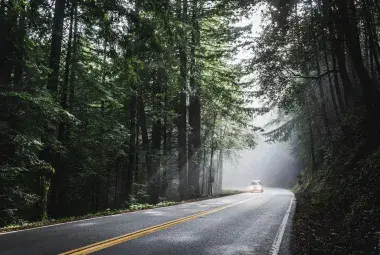
“You can’t connect the dots looking forward; you can only connect them looking backward. So you have to trust that the dots will somehow connect in your future.”
Those words stopped me.
Because suddenly, faith did not feel abstract anymore. It felt familiar.
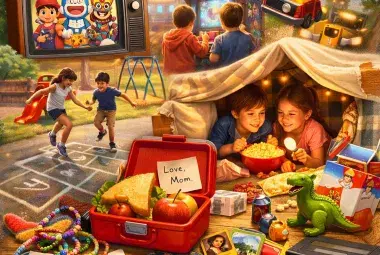
Looking back, I could finally see patterns moments I once labeled as failures that were, in truth, redirections. Doors that closed not to punish, but to protect. Seasons of waiting that quietly shaped my character, resilience, and clarity. What felt like loss at the time slowly revealed itself as preparation.
Image
In hindsight, the dots connected.
And in that realization, something gentle but powerful stirred within me: hope.
Hope is often misunderstood as optimism. But optimism depends on circumstances. Hope does not. Hope is the quiet decision to believe that meaning still exists even when evidence is incomplete. In that sense, hope becomes the human translation of faith.
Faith, even when small, becomes hope when it is allowed to breathe.
I realized then that the mustard seed was never about size. It was about permission. Permission to believe again. Permission to begin again. Permission to dream again even after disappointment has trained us not to.
This, perhaps, is the true miracle: not that mountains instantly move, but that hearts slowly soften.
Because the real mountains we face are often internal. Fear. Self-doubt. Fatigue. The belief that it is too late. The voice that whispers, You’ve already tried. These are the mountains that paralyze action long before circumstances ever do.
And so the first step of faith is not implementation. It is allowing oneself to hope again.
I believe now that even the ability to reflect this way to pause, to question, to remember is itself a gift of the Holy Spirit. Not a dramatic one. Not thunderous. But quiet. Gentle. Almost easy to miss. A nudge that says: You are not done yet.
Of course, reflection is only the beginning.
Implementation is another battle entirely.
To act on faith requires discipline. Consistency. Courage. It requires showing up on days when motivation is absent and results are invisible. It requires accepting limitations not as excuses, but as realities to work within. This is where many dreams quietly die: not from lack of vision, but from exhaustion.
And here is a humbling truth I have come to accept: no matter how intelligent a person is, no one is exempt from this inner battle.
Every human being wrestles with self-doubt. Every achiever has moments of fear. Every thinker has nights when clarity disappears. Faith is not a replacement for struggle; it is what allows us to stay in the struggle without surrendering our humanity.
This realization dissolved judgment in me both toward myself and toward others.
We are all, in our own ways, carrying invisible weights. We are all trying to reconcile who we were, who we are, and who we hope to become. And perhaps this is why faith resonates across cultures and beliefs: because it speaks to something universal the longing to believe that our lives matter, that our efforts are not wasted, and that our future is still open.
As this year closes and a new one approaches, I find myself not making grand resolutions, but holding a quiet intention: to protect the small seed of faith that has reawakened within me.
To nurture it with honesty.
To water it with discipline.
To guard it from cynicism.
To let it grow at its own pace.
Looking toward 2026, I do not claim certainty.
I do not promise myself instant mountains moved or effortless victories. What I claim instead is something far more precious: hope.
Hope that I can move mountains in my own understanding of achievement.
Hope that progress, even slow, is still progress.
Hope that beginning again is not weakness, but wisdom.
Hope that faith even when small is still powerful.
If you are reading this and find yourself tired, uncertain, or quietly afraid to hope again, know this: you are not alone. There is no judgment here. Only recognition.
Faith does not demand perfection.
It does not require eloquence.
It does not insist on confidence.
Sometimes, faith simply begins with a thought.
A memory.
A pause.
A willingness to believe just a little that your story is still unfolding.
Image
And perhaps that is the true gift of this season: not answers, but permission.
Permission to hope.
Permission to begin again.
Permission to believe that even the smallest seed can, in time, move what once felt immovable.
May this quiet faith carry us forward not loudly, not arrogantly, but courageously into the year ahead.
“The past does not imprison us; it explains us and gives us permission to begin again.”
— Dr. Mariza Lendez, Reflection on Faith and Becoming
thanks to Pixabay for these photos; StockSnap and Teeggee300