

People often believe that success always comes from serious planning, technical genius, or deep innovation. We tend to assume that the products that earn fortunes are created by teams of elite experts who carefully research every detail before release. Yet history shows a different and far more amusing truth. Some of the most profitable ideas began as jokes. They were called silly, pointless, embarrassing, or simply stupid. There were moments when inventors were mocked by investors and friends. There were moments when the first testers could not stop laughing. In many cases, the idea did not appear practical at all. It did not promise a better world or a more advanced future. It simply offered something strange that caught attention and sparked curiosity.
Why do these ideas work? Human psychology responds to novelty. People enjoy buying something that feels fun or outrageous or so surprising that it becomes a story. A product that makes someone stop and ask what is that can achieve viral attention without expensive advertising. The power of amusement and curiosity can reach deep into culture. This is the same force that drives memes, viral videos, and unpredictable trends. When an odd invention appears at the right moment, people suddenly want it. Even if the value is not functional, the emotional reward becomes enough to trigger mass purchasing behavior.
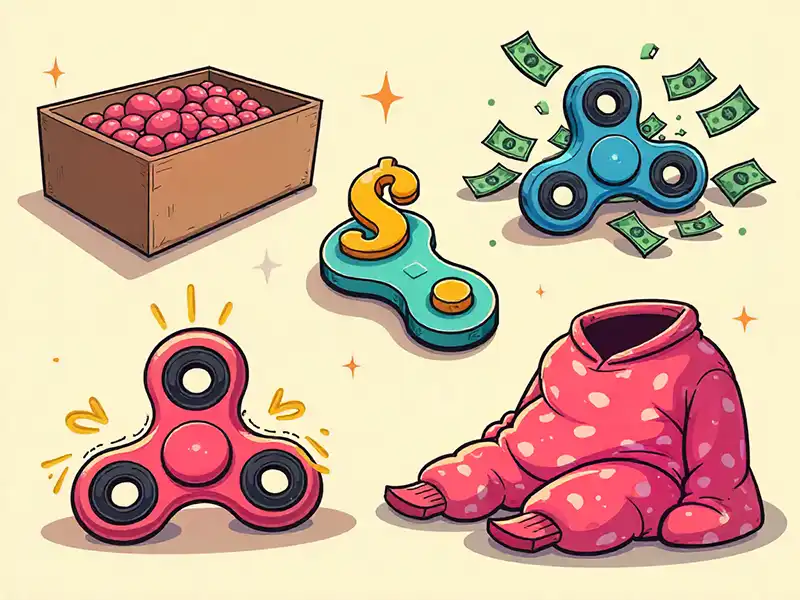
Another factor is that many consumers enjoy a feeling of owning a tiny piece of cultural madness. A rock in a cardboard box can become a memory for life. A ridiculous blanket with sleeves can become a family joke. A spinning toy with no purpose can take over entire schools. These products remind us that laughter and irrational excitement are part of the economy. People do not only buy what they need. They also buy what makes them smile or what gives them a sense of connection with a shared trend.
The stories that follow are proof that stupidity combined with clever marketing can result in fortunes. They show that the line between dumb and genius is far thinner than business textbooks admit. Creativity expresses itself in unpredictable ways. Sometimes the most profitable path is the one that nobody takes seriously at first. These ideas turned ordinary objects into cultural icons and in the process created millions for their creators. If there is a message here, it is simple. A strange idea can open a door that leads directly to the bank.
1. The Pet Rock
The Pet Rock began during the 1970s when a man named Gary Dahl noticed his friends complaining about the responsibilities of owning pets. Feeding, grooming, training, taking walks, and constantly worrying about messes took effort and time. Dahl jokingly suggested a pet that required nothing. No training. No food. No walks. Just a rock. That joke became a product. Dahl selected smooth stones from a beach in Mexico, placed them in a small cardboard box that included air holes and straw bedding, and wrote a humorous instruction manual explaining how to care for this perfectly obedient companion. The comedy became the entire selling point.
People did not buy the rock because they needed a companion. They bought it because the idea created a shared cultural laugh. It became a gift item at parties. It became a clever novelty item that communicated irony. Consumers were not purchasing a geological object. They were purchasing a witty statement about the absurdity of consumer culture itself. Dahl leaned into that feeling by treating the joke seriously. The instruction manual taught owners how to help the rock play dead or roll over. The absurdity became refined marketing psychology.
Within a short period, the Pet Rock sold more than a million units. A beach stone that cost almost nothing to source suddenly turned into massive profit. Dahl improved his margins by designing packaging that created the illusion of pet ownership. The box became an emotional device. The straw bedding made people laugh. The air holes pushed the imagination further. Buyers did not feel tricked. They felt in on the joke. Dahl understood that humor could be monetized if the audience felt they were participating willingly.
Image
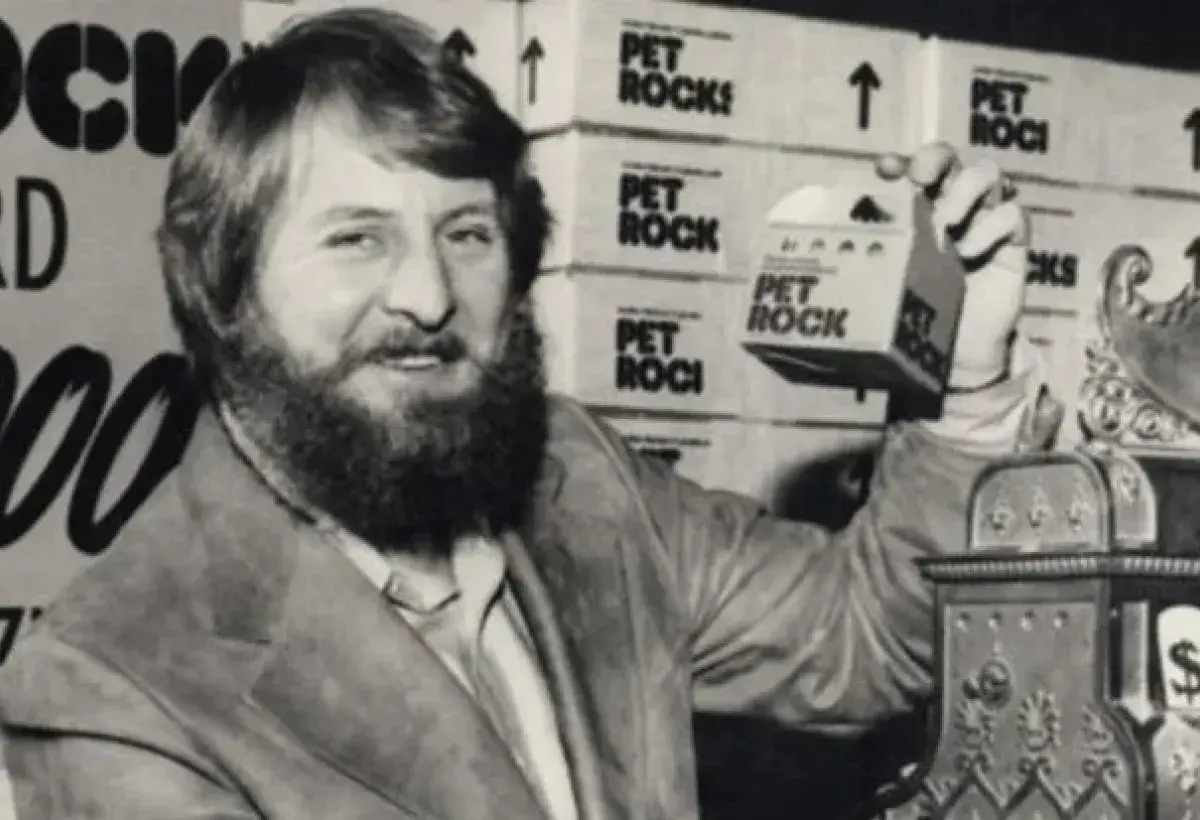
The Pet Rock teaches a business lesson. Consumers sometimes want entertainment more than practicality. A silly idea can transform into a cultural talking point that generates rapid impulse purchasing. The product gained media attention because journalists could not resist the story. Television talk shows invited Dahl to appear because audiences wanted to witness the ridiculous idea that turned ordinary objects into a viral experience. Even today, collectors search for original boxes because they represent a comedic moment in marketing history. Dahl proved that clever packaging and a playful imagination can overcome the absence of actual utility and still make a fortune.
2. The Million Dollar Homepage
When student Alex Tew needed money to pay for university tuition, he did not look for a job. Instead, he created a single webpage and divided the screen into one million tiny pixels. Each pixel could be purchased by advertisers for a single dollar. Buyers could add logos or tiny messages. The concept did not make sense to many people at first because a single pixel carries almost no visibility. Yet the simplicity mixed with public curiosity created momentum.
The first advertisers joined because the experiment felt fresh. They also gained the satisfaction of participating in something that looked like a digital stunt. As more pixels filled up, media coverage accelerated. Television and newspapers began reporting on this strange college student selling internet real estate one pixel at a time. Suddenly, the website stopped being a simple page. It became a spectacle. Visitors wanted to see who was participating. They wanted to locate tiny graphic squares or read microscopic promotional text. As traffic grew, advertisers wanted space simply to be seen next to the attention.
This effect became very similar to a snowball rolling downhill. Visibility attracted more sales. The higher price of attention created urgency. People bought pixels for fun. Companies bought pixels out of competitive instinct. Even skeptics admired the genius of the idea. In the end, Tew sold every pixel and earned a million dollars. He also became an early example of viral digital entrepreneurship.
Image
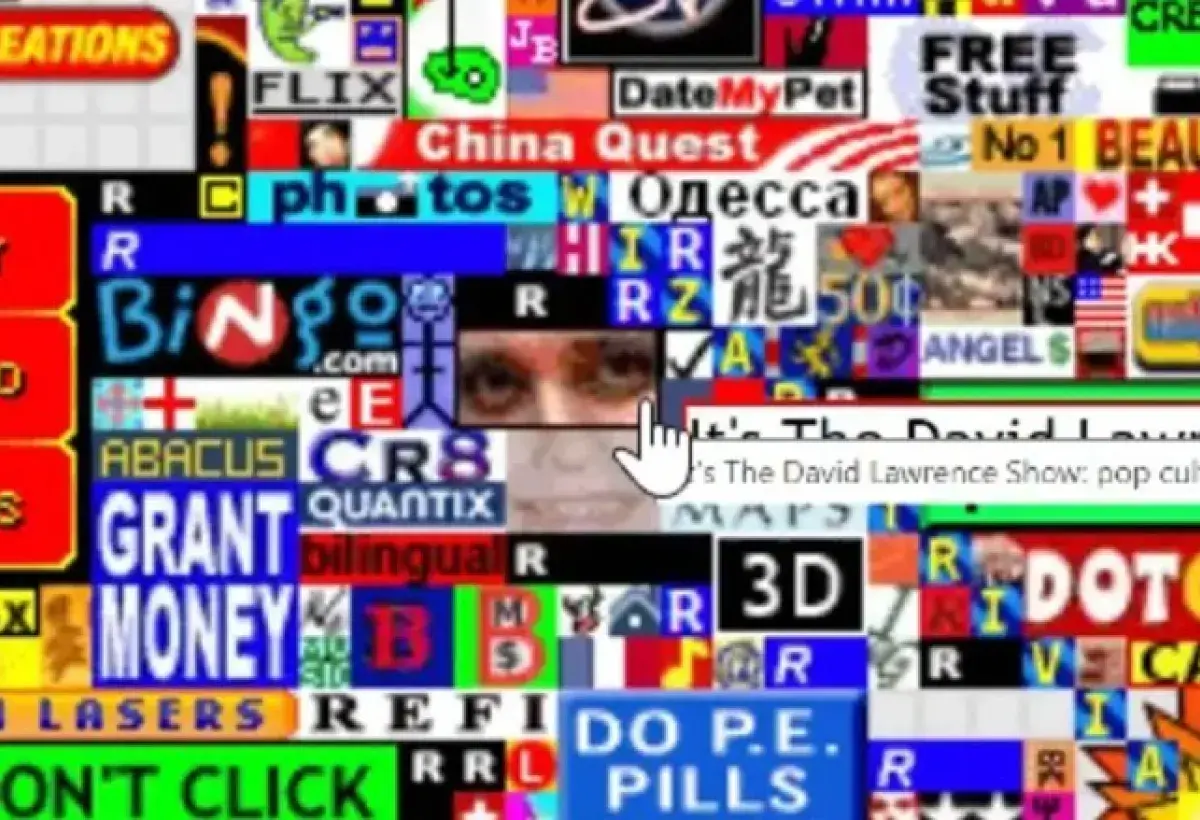
The Million Dollar Homepage created a category of online novelty marketing that encouraged playful spending. It also demonstrated that virality can replace traditional product design. The website did not solve a problem. It did not entertain through storytelling. It did not provide a service beyond a sense of involvement. The reward was participation in a digital cultural event. In many ways, Tew leveraged basic psychology. People want to buy status. When the remaining pixels became scarce, that status became more desirable.
This idea was considered stupid by many observers because it lacked intrinsic value. Yet it proved that attention itself can become a commodity. In a world where advertising fights for visibility, even a pixel can represent opportunity. Tew transformed a need for tuition into a lesson about innovation. Sometimes a simple concept does not require utility. It only requires spectacle and timing.
3. Snuggie (the blanket with sleeves)
The Snuggie entered the consumer world as what many called a backward robe. It was marketed as a blanket with sleeves. The idea sounded unimpressive. Early reactions suggested that nobody wanted to look like a monk sitting on a couch. Yet the Snuggie tapped into a hidden annoyance. People sitting on a sofa watching television often feel cold but cannot comfortably use their hands while wrapped in a regular blanket. Adding sleeves solved this minor inconvenience. That single adjustment moved the product from comedy toward utility.
The true breakthrough came from late night television advertising. The commercials were hilarious. Actors in oversized sleeved blankets clapped at events, sat in stadium seats, and waved their arms like cheerful cult members. Viewers laughed at the imagery. That laughter drove sales. The commercials also turned the product into a shareable cultural joke. People purchased Snuggies as gag gifts. Some purchased them sincerely for the warmth. Families who lived in colder regions appreciated being able to handle a remote control or a book without freezing their hands.
Snuggie parties became popular. Groups wore them for fun and posted photos online. The fabric color options expanded from neutral tones to animal prints and loud patterns. The absurdity transformed into an identity. Snuggies climbed into the millions of sales because the marketing leaned into self aware humor.
Image

Critics predicted the product would disappear quickly because novelty items often fade. Yet the Snuggie remained a sales success because it found a repeat audience. Cold homes, dorm rooms, holiday seasons, and gift giving traditions sustained demand. Despite mockery, the blanket with sleeves became a household concept. It entered pop culture references through sitcoms and comedy sketches.
The Snuggie teaches a product lesson. Solving a tiny comfort problem can create massive consumer desire when combined with comedic marketing. The design did not involve complicated engineering. It simply improved a blanket. The humor created memorability. The result proved that laughing at a product can convert into buying behavior.
4. Doggles
Doggles began as a joke like many products on this list. They were sunglasses designed specifically for dogs. The initial reaction from observers was disbelief. Why would an animal require eyewear? Why would a pet owner spend money on something that appears absurd? The answer came from a combination of affection, protective instinct, and novelty. Pet owners enjoy expressing love through accessories. They also enjoy treating their animals as family members.
Doggles were first marketed to ordinary consumers who wanted cute photos of their dogs. Owners enjoyed the humor of seeing a dog wearing goggles. Those images created shareable content for early blogs and social networks. Every funny photograph became an advertisement. Eventually, Doggles expanded beyond the novelty crowd. Veterinarians and canine specialists began noticing that some working dogs could benefit from eye protection. Dogs serving in military environments were exposed to dust, debris, and bright sunlight. Protective goggles helped maintain eye safety. This shifted the product identity from a silly accessory to a specialized tool.
Image

Once military working dog programs adopted Doggles for certain missions, credibility increased. The product line expanded to include sizes for various breeds and models for different lighting conditions. Media outlets reported on this unusual success. Pet stores began stocking Doggles because owners felt that fashionable protection belonged in the same category as sweaters or collars. The emotional driver remained powerful. Many consumers see pets as extensions of their identity. If a person can wear stylish shades, their dog can too.
Despite laughing responses from outsiders, the brand built loyalty. Doggles became a statement purchase. It allowed pet owners to bond with their animals while posting entertaining images. It also revealed that the pet accessory economy is enormous. Owners routinely spend money on treats, toys, and luxury items that exceed practical necessity.
The Doggles story demonstrates a pattern. A silly idea often hides a hidden market. If it resonates emotionally, visibility multiplies. When a product blends cuteness, humor, and unexpected usefulness, the result can become a profitable cornerstone in a multibillion industry. Doggles proved that eyewear could cross from human fashion into canine expression and still find financial success.
5. Pet Insurance
When pet insurance first entered consumer discussion, many people laughed at the suggestion. Insuring an animal seemed ridiculous. It reminded skeptics of insuring a toaster or a houseplant. The concept felt unnecessary because traditional culture viewed pets as animals rather than family members. Over time, society changed. Pet ownership shifted into emotional companionship. People increasingly treat pets like children, spending heavily on health care, grooming, nutrition, and comfort.
Pet insurance existed to address the rising costs of veterinary services. Medical treatments that once seemed extreme became common. Surgeries, cancer therapy, advanced diagnostics, and emergency care reached prices that placed financial pressure on families. Rather than face heartbreaking decisions every time a dog or cat became ill, people sought protection. Insurance transformed emotional anxiety into economic planning.
At first, marketing teams struggled because consumers were unsure how to evaluate coverage. Yet education campaigns helped normalize the idea. Articles discussed the rising expense of pet care. Veterinarians suggested insurance to avoid financial crises during emergencies. As adoption increased, insurance companies expanded their product lists to include accident coverage, illness coverage, wellness visits, annual shots, and even exotic animal packages.
Image

The emotional attachment became the marketing engine. People felt responsible for safeguarding their animals. The idea that a beloved pet could receive treatment without financial difficulty became a comfort purchase. Over the years, this once mocked concept grew into a multibillion industry with large corporations participating. Plans now resemble human health insurance with deductibles, monthly payments, and optional riders.
The success of pet insurance proves that cultural perspectives evolve. What seemed irrational becomes normal when supported by emotional and economic incentives. Companies realized that people invest in love. They spend money not because of financial return but because of emotional security. The creators behind pet insurance identified a psychological trigger rather than a technological breakthrough. The industry thrives because people believe their pets deserve care equal to human family members.
Pet insurance no longer sits in the category of silly ideas. It represents a sophisticated market tied to social change, emotional values, and financial practicality. The genius hid behind sentiment.
6. The Yellow Smiley Face
The Yellow Smiley Face appears simple. A circle filled with bright yellow, two black dots for eyes, and a curved line representing a smile. It looks like artwork created by a child. For critics, the simplicity made it seem meaningless. Yet this extremely basic design tapped into a universal human reaction. A smile communicates happiness instantly across languages and cultures. The icon became a visual form of emotional transmission.
Harvey Ball created the image to improve morale among workers at an insurance company. The purpose was not mass marketing. It was a tiny internal design to generate friendliness. Yet the drawing became larger than the assignment. People enjoyed the way the symbol triggered a small emotional lift. Buttons and stickers appeared. People placed them on lunchboxes and school binders. It became a marker of positive identity. The design had no complexity, but it delivered emotional clarity that everyone could understand.
The commercial breakthrough came when licensing turned the image into a product. Companies placed it on shirts, mugs, stationery, posters, and novelty goods. The smile became a brand without words. It sold happiness. Teenagers adopted it as a cultural sign of casual freedom. Stores sold millions of inexpensive items featuring the face.
Image

The rise of the smiley face also aligned with emotional marketing theory. A symbol that required no translation would travel across borders. It displayed positivity in a world struggling with political and social tension. In many ways, the simplicity made it flexible. It appeared on protest material, comic posters, and commercial packaging. As digital messaging grew, the smiley evolved into an early emotional icon for computer interfaces. It paved the way for emoticons and emojis.
The smiley face’s financial success demonstrates the power of emotional design. Something that looks almost absurd to artists or designers can influence culture when it connects instantly with human emotion. The genius existed not in artistic complexity but in clarity of communication. The symbol required no explanation. It simply transmitted good feeling. That feeling translated into commercial power.
What critics once viewed as silly doodling became one of the most printed images in merchandising history. The smiley face turned human psychology into a very lucrative property.
7. I Can’t Believe It’s Not Butter!
Naming a product after something it is not seemed foolish when marketers first considered it. The phrase I Can’t Believe It’s Not Butter felt like a punchline. Traditional branding aimed for clarity and confidence. It pushed positive identity. Products were expected to sound delicious or luxurious or nutritious. This brand used disbelief as the main hook. It shocked audiences because it did not follow conventional naming logic.
The product itself was a butter substitute designed to taste similar to dairy butter while delivering a lighter profile. Competing margarine brands used predictable names. That created a cluttered shelf where everything looked identical. The unusual name stood out instantly. Consumers repeated it out loud. They laughed at the length and the dramatic tone. Soon the humor became a commercial advantage.
Advertising campaigns amplified theatrical presentations. Actors expressed dramatic surprise while tasting the product. Commercials often repeated the phrase to cement memory. The language became a cultural line. People used it jokingly outside the kitchen. Children repeated it. It became part of sitcom dialogue.
Image
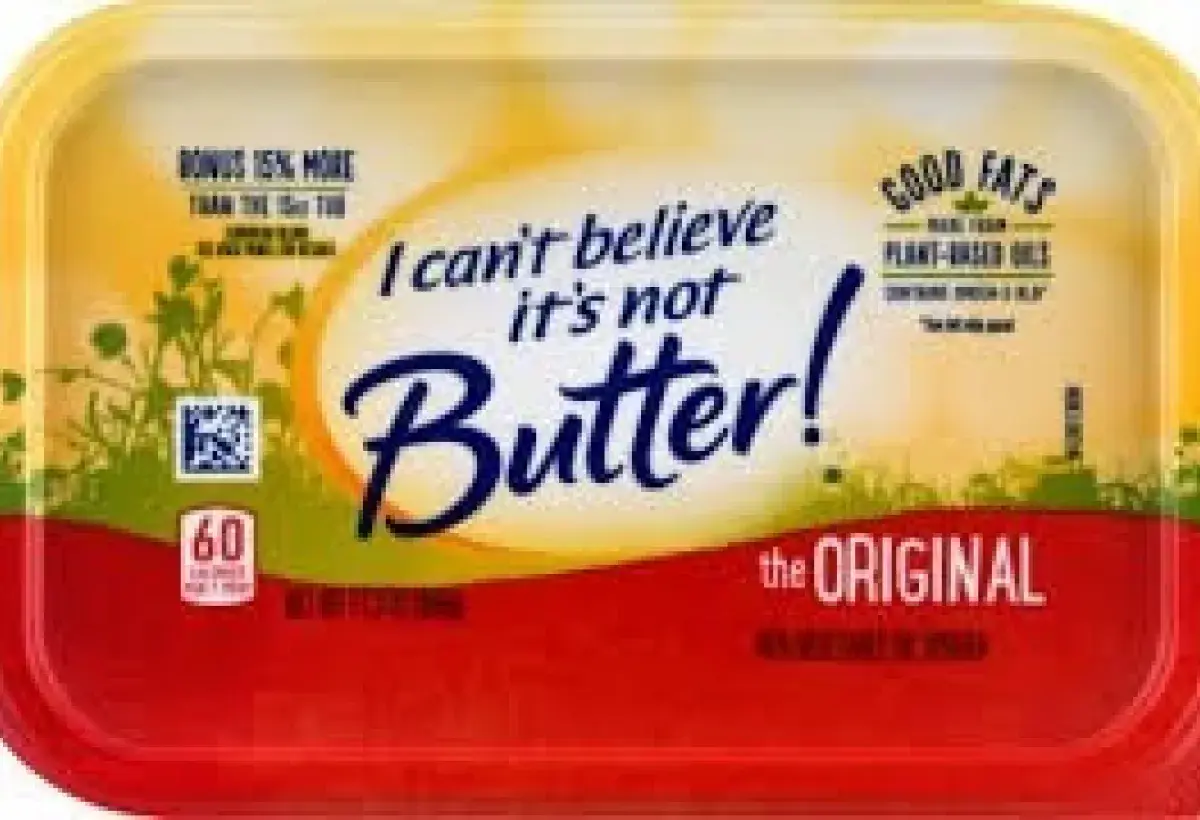
The brand succeeded because it transformed a negative comparison into playful confidence. Instead of saying our product tastes like butter, it said your senses will be amazed. The name invited a taste test challenge. Shoppers purchased the product to see whether they would believe it or not. This created curiosity driven sampling. The more people sampled, the more product left the shelves.
The unusual branding expanded into international markets where translation added further amusement. It became a grocery product that stimulated conversation. In the world of packaged foods, discussion equals brand power. Housewives, college students, and families displayed it proudly inside refrigerators. It became an icebreaker. Few food products reach that level of social presence.
In the end, the name that sounded ridiculous became a global marketing triumph. It reminded businesses that storytelling overrides convention. When comedy and creativity intersect, even a tub of spread can command attention. The brand proved that ridicule can be transformed into memory and memory converts into sales.
8. Big Mouth Billy Bass
Big Mouth Billy Bass entered stores as an electronic singing fish mounted on a plaque. The fish would move its head outward, open its mouth, and sing short musical lines. The invention looked absurd. Nobody needed a singing fish. Yet the product became a runaway novelty success across the United States and beyond. It sold because it represented unpredictable humor. It also tapped into gift giving culture during the holidays.
Big Mouth Billy Bass delivered physical movement and music at a time when households enjoyed mechanical toys. It combined surprise and silliness. Buyers mounted the fish on walls in kitchens, garages, and bars. Visitors would activate it to hear songs. The laughter created repeat demonstrations. That repetition drove more sales because guests decided they wanted one too. Families used it as a conversation piece.
Image
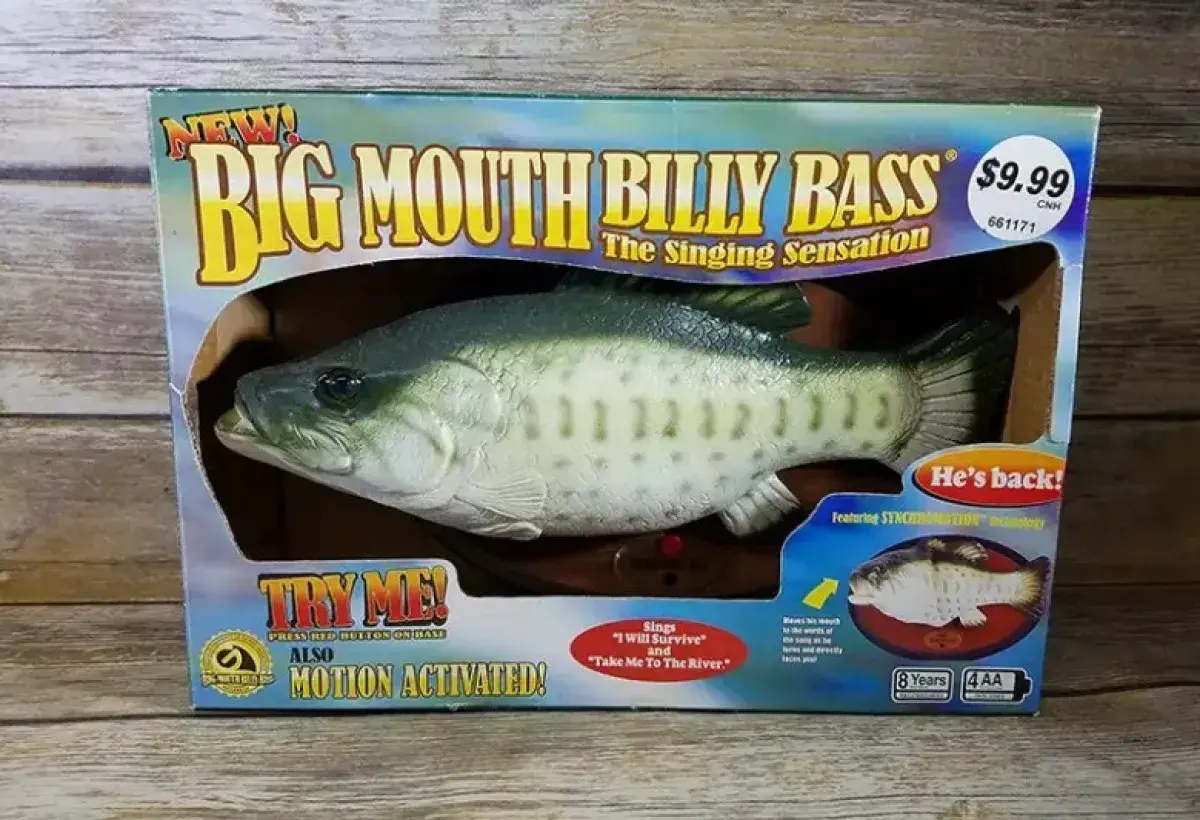
Media appearances helped push the fish into legend. Television hosts displayed Billy Bass during broadcasts. Musicians referenced it ironically. It became a pop culture meme before social networks existed. The product aligned perfectly with prank culture. Coworkers placed the fish in surprising locations. People wrapped them as gag gifts. For companies, this created repetitive purchasing during several seasonal cycles.
Although the device seemed pointless, it offered emotional reward. It allowed adults to enjoy a childlike sense of play. Busy workers returned home and pressed the activation button for a quick laugh. Humor is reaffirmation. The fish delivered that small moment. Retailers recognized that joy converts into disposable income. Toys for adults do not require rational purpose.
Billy Bass also demonstrated that audio repetition can become branding. The lines it sang stuck in memory. People who heard it once could not forget the tune. That memory transferred into demand. By mixing music, motion, and surprise, the product triggered a multisensory experience. Even critics of the device remember its effect.
What began as a silly electronic fish now stands as one of the most famous novelty products of the early 2000s. It earned millions for the manufacturer and proved that laughter has financial value. The lesson is clear. If a product can create joyful absurdity, it can earn its place on a wall and inside a shopping cart.
9. The Slinky
The Slinky started as an accident. Richard James, a naval engineer, experimented with tension springs for ship equipment. One spring fell from a shelf and performed a slow cascading motion across a series of surfaces. That accidental descent looked entertaining rather than useful. James recognized that the spring had found a new identity. He and his wife Betty decided to turn the coil into a toy.
Many people dismissed it because the Slinky does nothing beyond walking itself from higher steps to lower ones. It does not flash lights, speak, or build skills. Yet that simplicity became a strength. Children enjoyed watching the hypnotic motion. It delivered repeat stimulation without mechanical parts. The toy became affordable. Parents bought it as a stocking stuffer.
Image
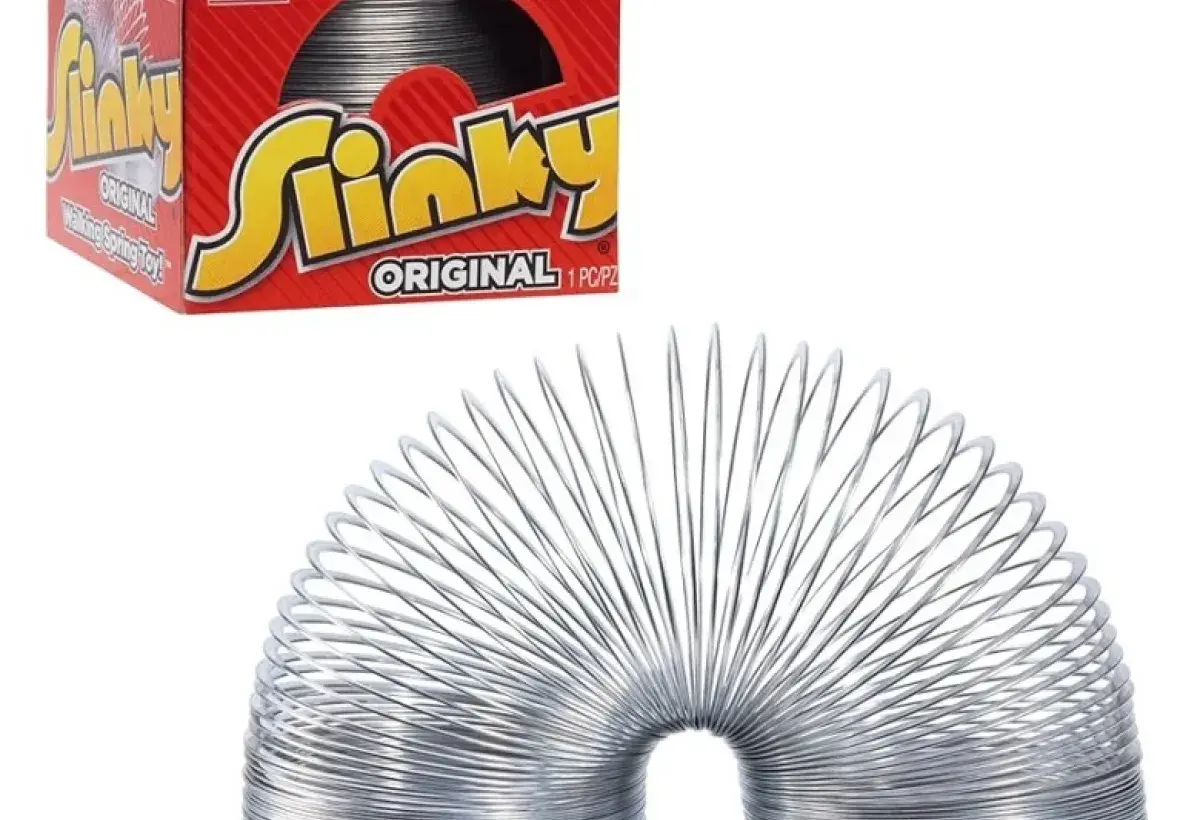
The marketing strategy involved live demonstrations in department stores. When shoppers saw the coil performing its wobbling descent, they gathered around. Crowd behavior stimulated even more curiosity. Children begged parents for a turn. This real world virality produced massive unit sales. The toy crossed generations. Soldiers carried Slinkies during wartime boredom. Teachers used them for physics demonstrations. Scientists referenced the springs when discussing wave motion.
The Slinky represents an important insight regarding invention. Sometimes an object created for industry becomes a cultural item when its movement sparks delight. The emotional connection became deeper because the Slinky required no instructions. Children discovered new tricks. They stretched it, flipped it, tangled it, and restarted. Even the failure of tangling became part of the experience. That resilience helped the toy survive for decades.
The Slinky reached hundreds of millions in sales since the 1940s. It stands among the most recognizable toys in history. What began as an industrial component turned into a celebration of motion. Richard and Betty James trusted their instinct rather than the criticisms of logical adults. That instinct produced a cultural icon that remains available in toy aisles today.
10. Fidget Spinners
Fidget Spinners arrived at a moment when attention culture was transforming. Children and teenagers were increasingly distracted in classrooms. Some experts suggested that hand occupied toys might assist concentration. The spinner consists of a central bearing that allows outer lobes to rotate rapidly with little friction. When held between fingers, the device spins freely. That is the entire function. No lights. No storyline. Nothing purposeful beyond rotation.
Initially, most adults considered the device useless. Teachers saw it as disruptive. Yet the simplicity triggered fascination. The spinning motion became a repetitive reward. Much like tapping a pencil or clicking a pen, the spinner gave restless users a channel. That perceived benefit helped fuel parental approval. But the cultural explosion came from social media. Videos showcased tricks, challenges, and speed tests. Influencers demonstrated advanced spins. Children began collecting different colors and shapes.
Image
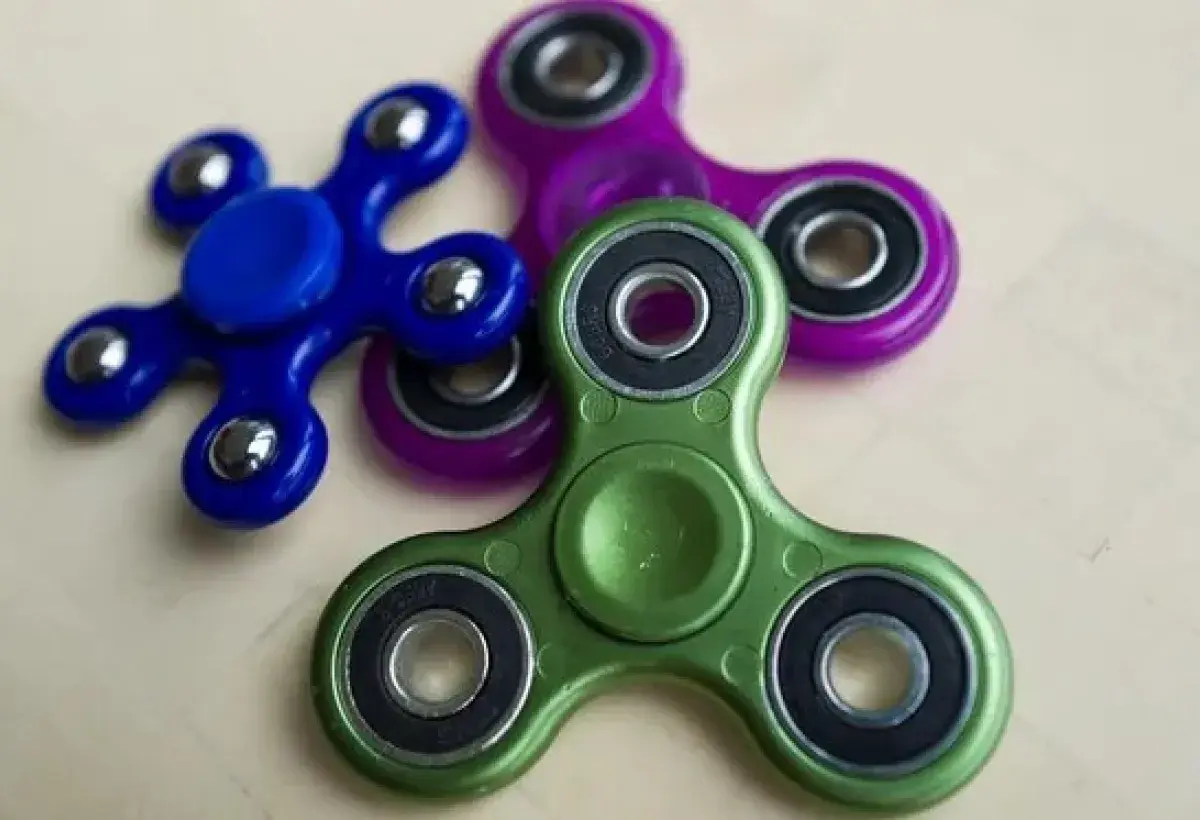
Soon, stores could not restock fast enough. Manufacturers flooded the market with variations. Some spinners glowed. Some used metal bearings. Some included odd shapes designed to improve spin time. Schools began banning them because students were spinning instead of studying. The ban created underground demand. The tension between adult authority and youthful rebellion accelerated sales.
The craze peaked rapidly. Within months, global sales hit extraordinary volume. Critics complained that the toy lacked purpose. Yet they underestimated one simple rule of behavioral economics. People purchase stimulation. They purchase sensory feedback. When children compete socially, the desire to own the trend increases.
Although the spinner’s global frenzy slowed, it did not disappear. It became a permanent category within tactile toys. Therapy groups adopted variations for anxiety management. Office workers use them while thinking. The device that began as a silly distraction became part of a wider sensory market. Its success generated millions in revenue and cemented itself as a symbol of viral trend economics.
These stories showcase a shared truth. Innovation does not always follow reason. A silly idea can capture imagination. A pointless product can command emotional loyalty. The boundary between useless and priceless is shaped by culture, humor, timing, and attention. Marketing can turn an everyday object into a desirable collectible. Emotional connection can transform a joke into a business model.
If a rock inside a cardboard box can sell a million units, that means imagination remains more valuable than logic. If a spinning toy with no purpose can dominate schoolyards worldwide, that means human excitement behaves unpredictably. These examples reveal that consumers seek happiness. They want jokes, surprises, and cultural participation. They want to own a piece of collective memory.
Entrepreneurs should learn from these victories. Rather than dismissing a weird thought, they should explore its emotional potential. Instead of asking whether a concept is rational, ask whether it is fun or memorable. A strange idea that triggers curiosity can outperform a respectable idea that inspires no reaction. The greatest risk is not being laughed at. The greatest risk is being ignored.
Every item in this list started with disbelief. Inventors heard phrases like that will never sell or that is stupid. They ignored those voices. They trusted instinct. They embraced comedy. They created stories. Consumers responded. Profits followed. Ridicule turned into revenue.
This collection of bizarre successes offers a reminder that business does not live in spreadsheets alone. It also lives in laughter, impulse, and irrational desire. If you have an idea that makes people smile, you might be closer to a breakthrough than you think. Stupidity can become strategy. Playfulness can become profit. The bank account does not judge logic. It records results.